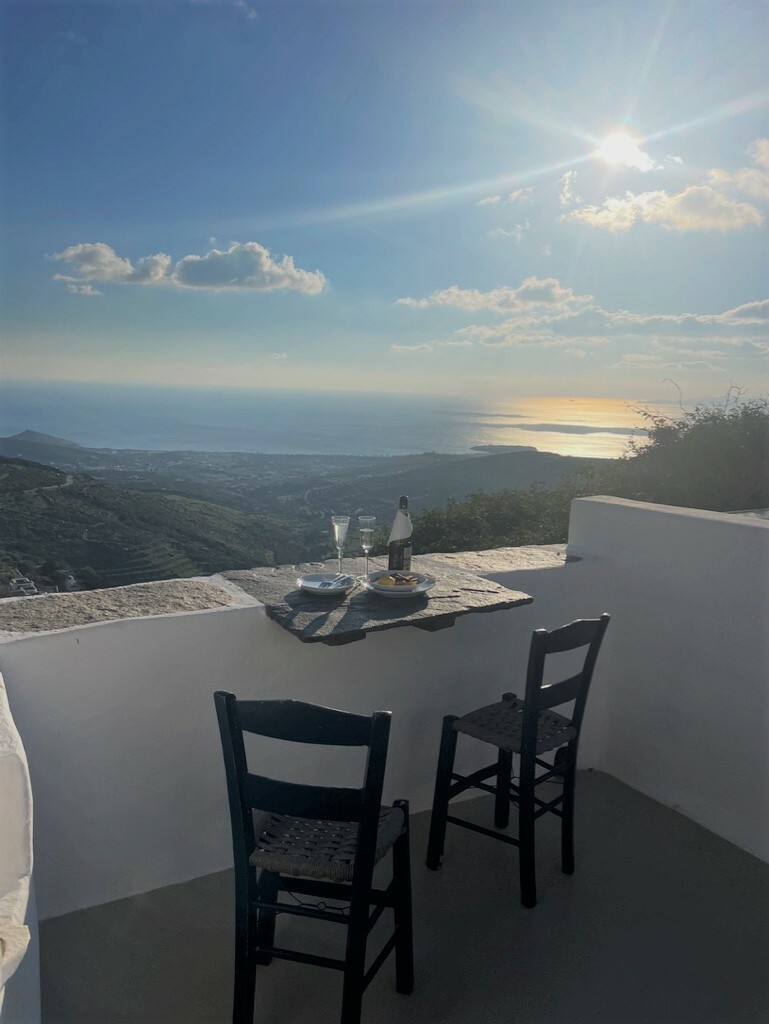
Outdoor areas
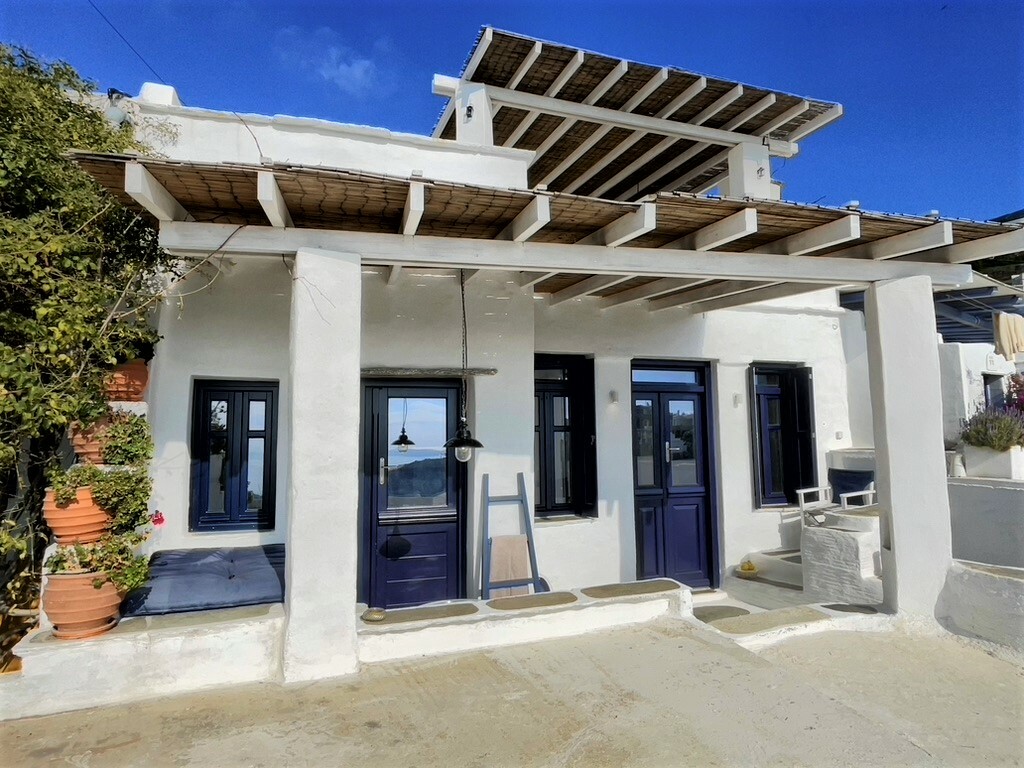
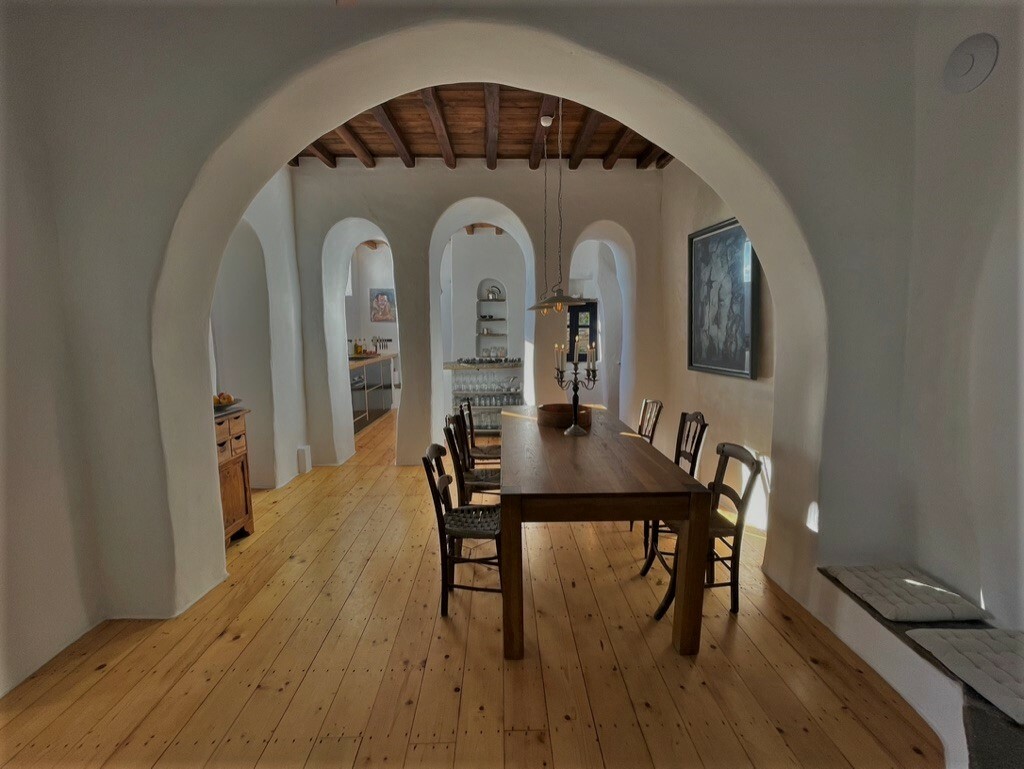
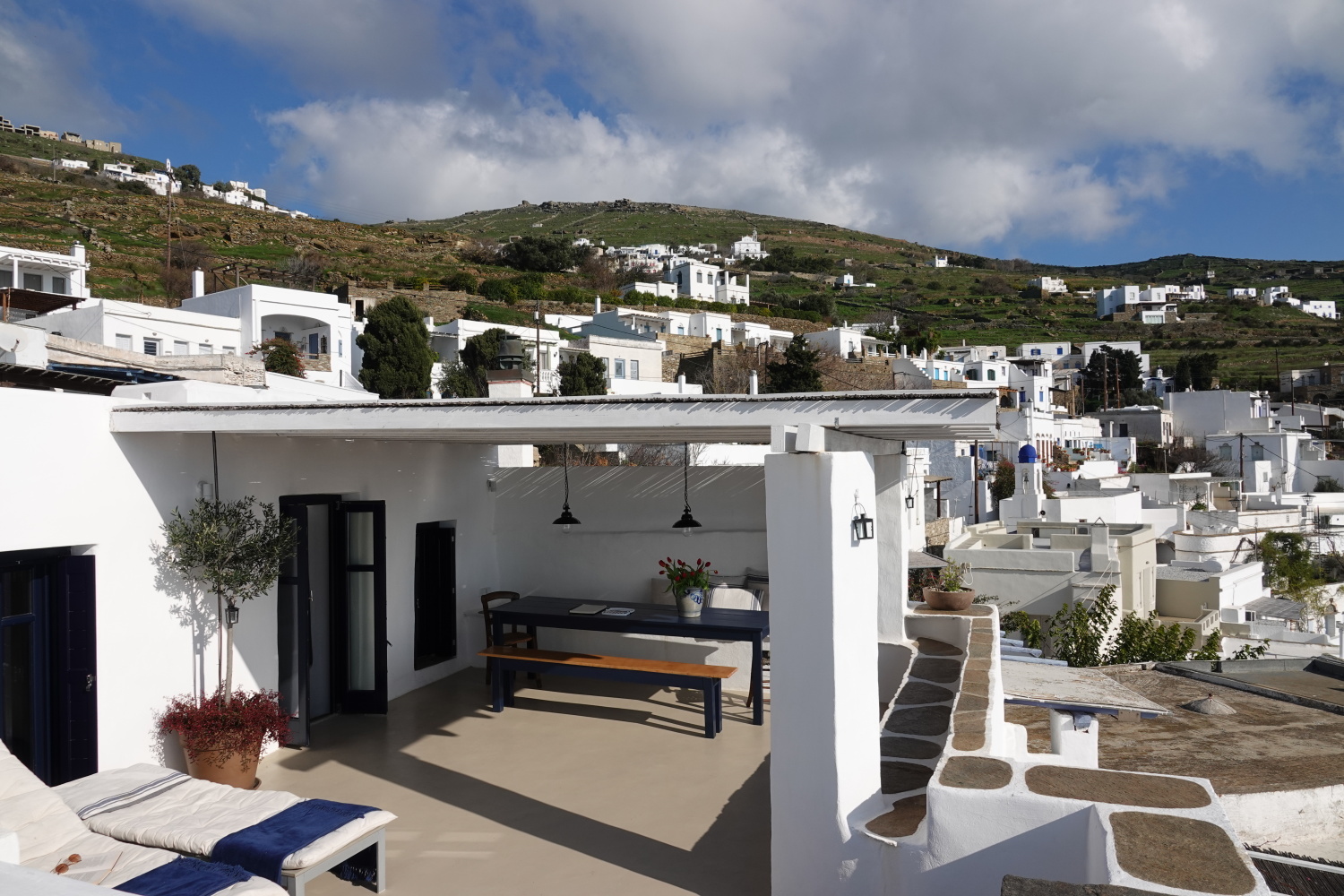
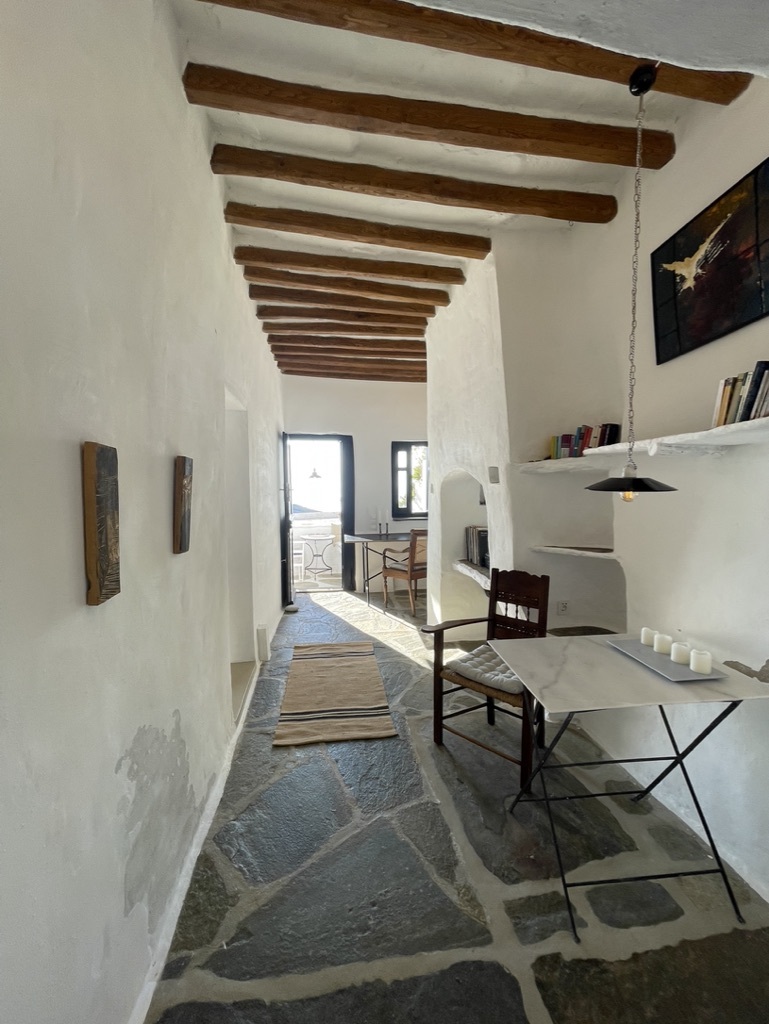
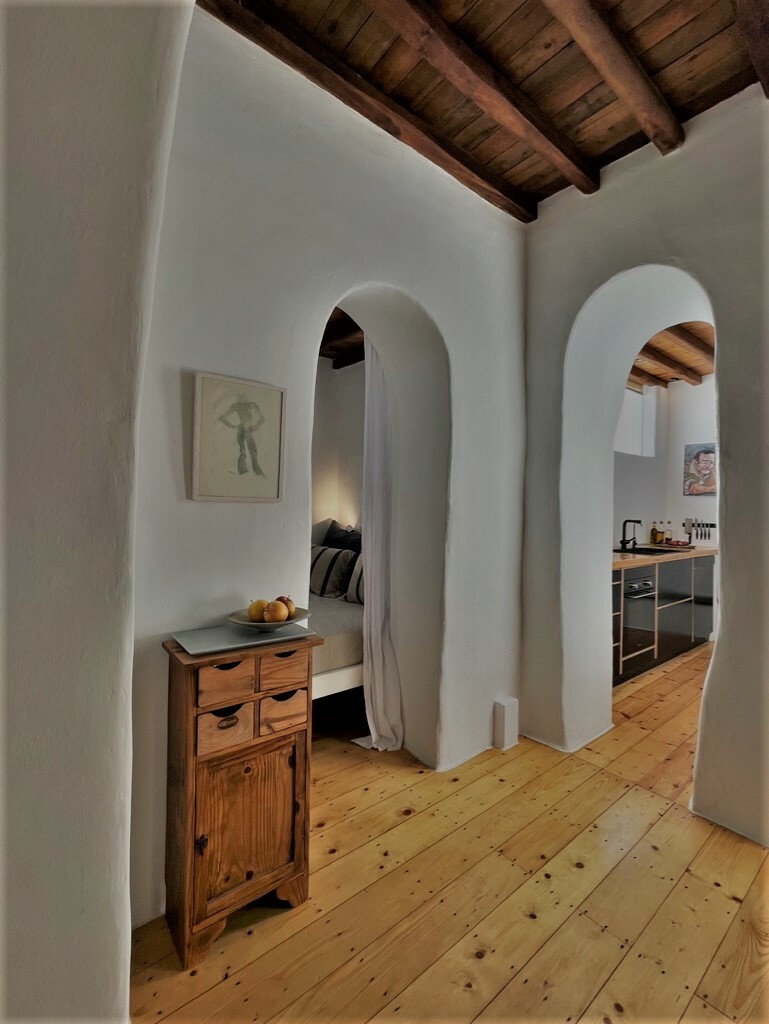
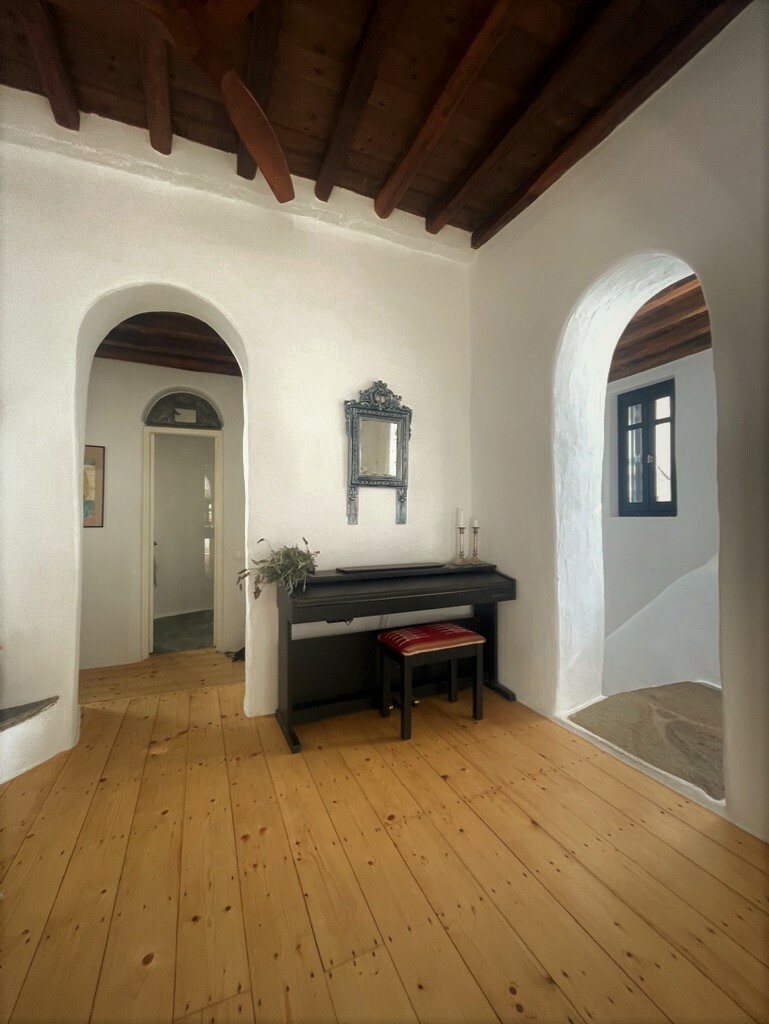
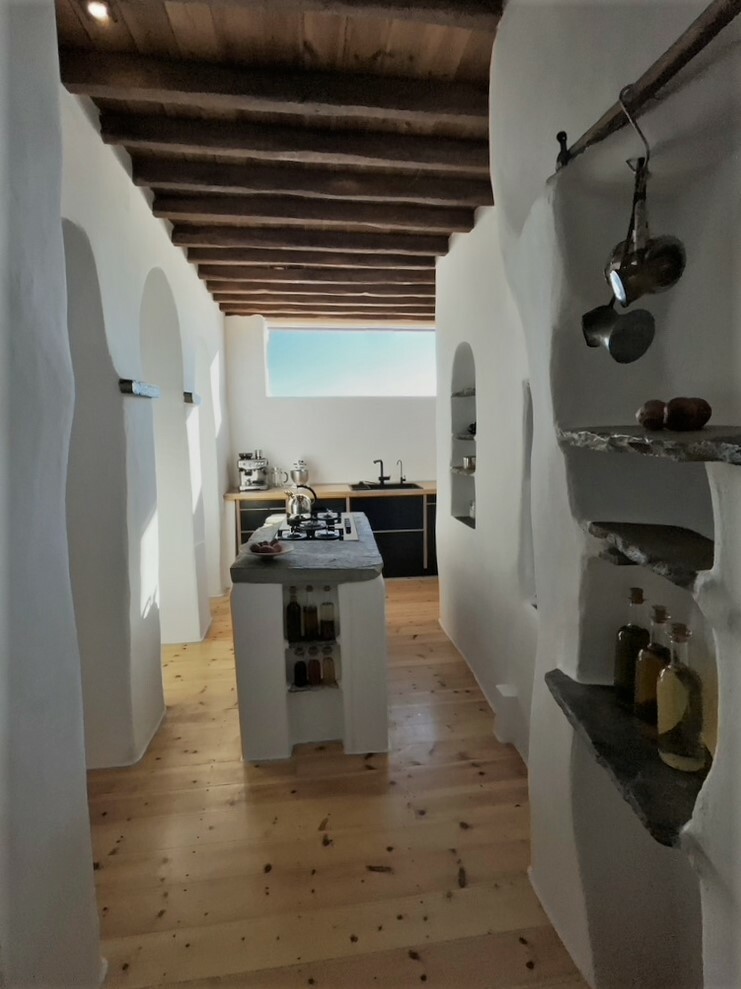
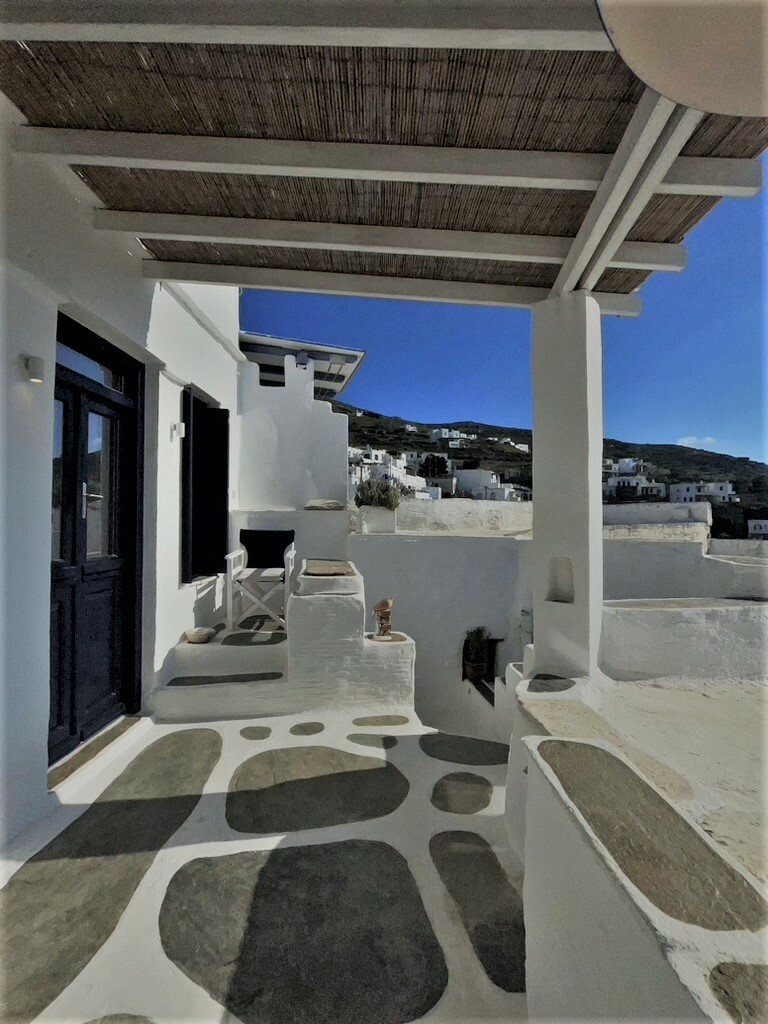
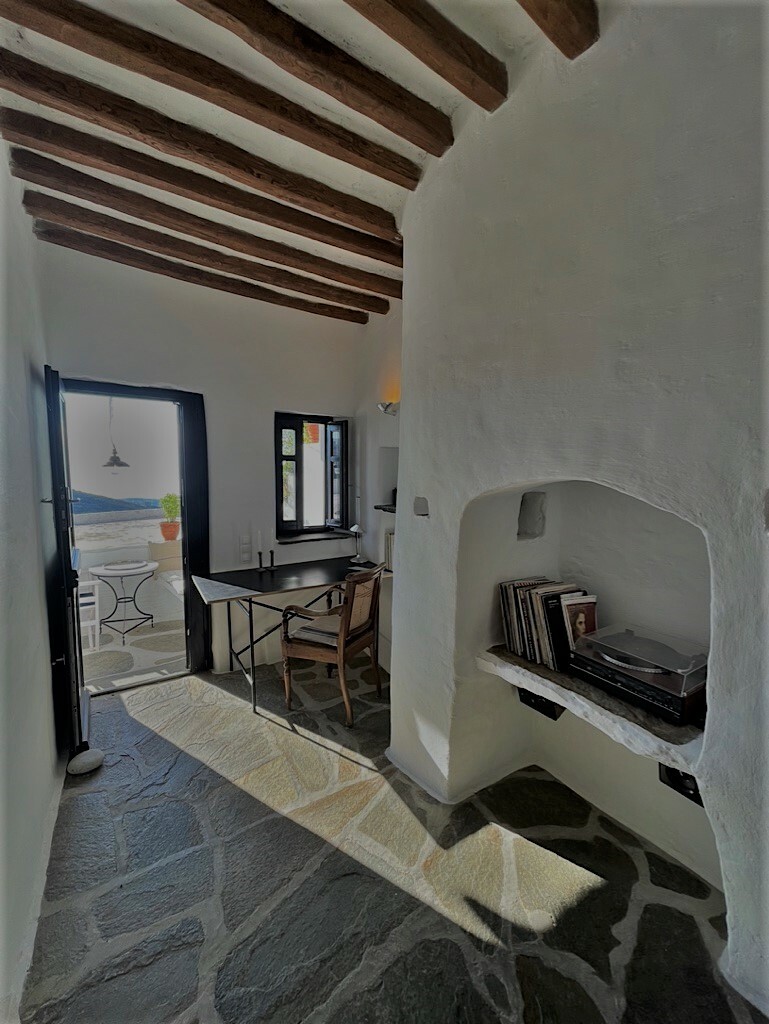
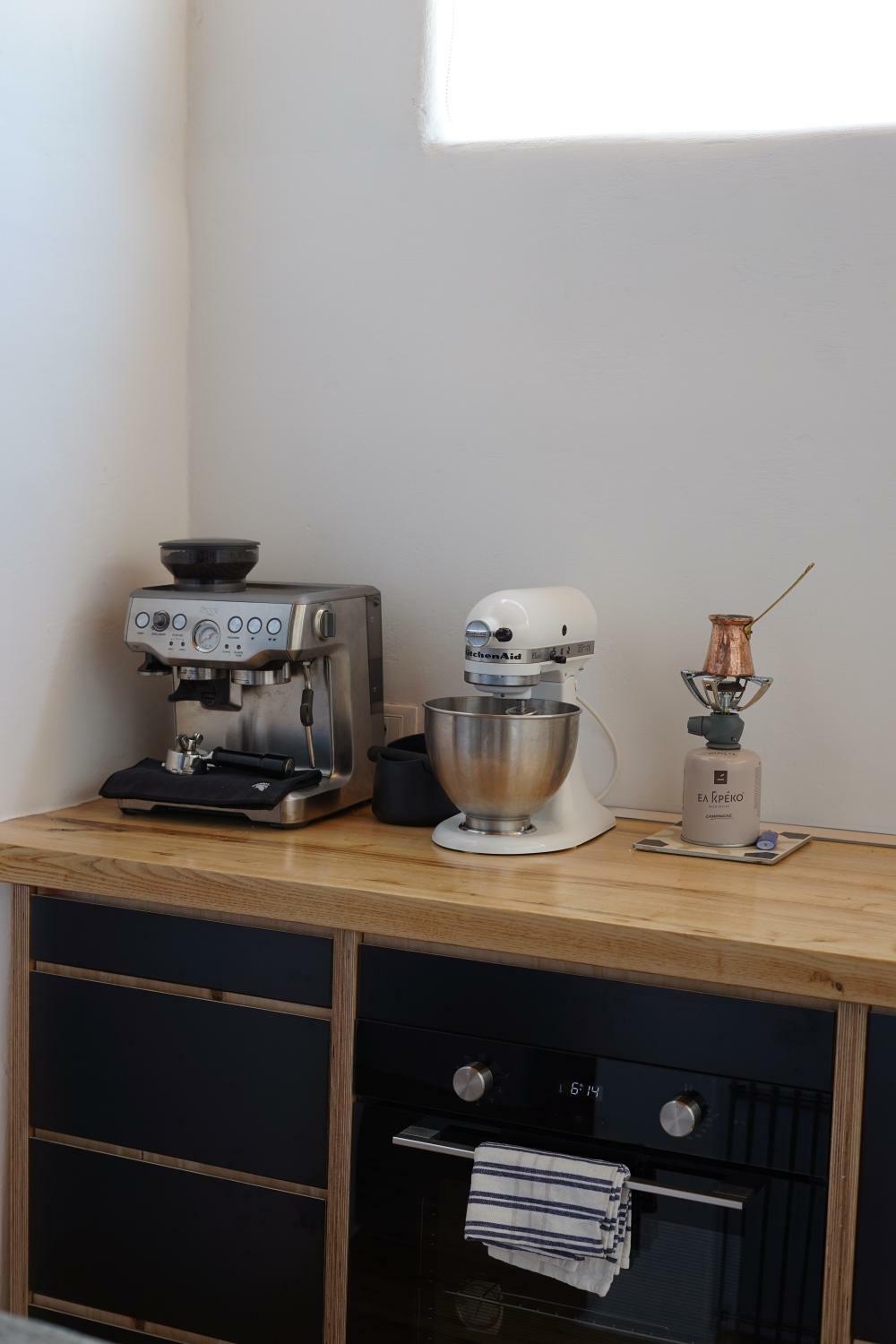
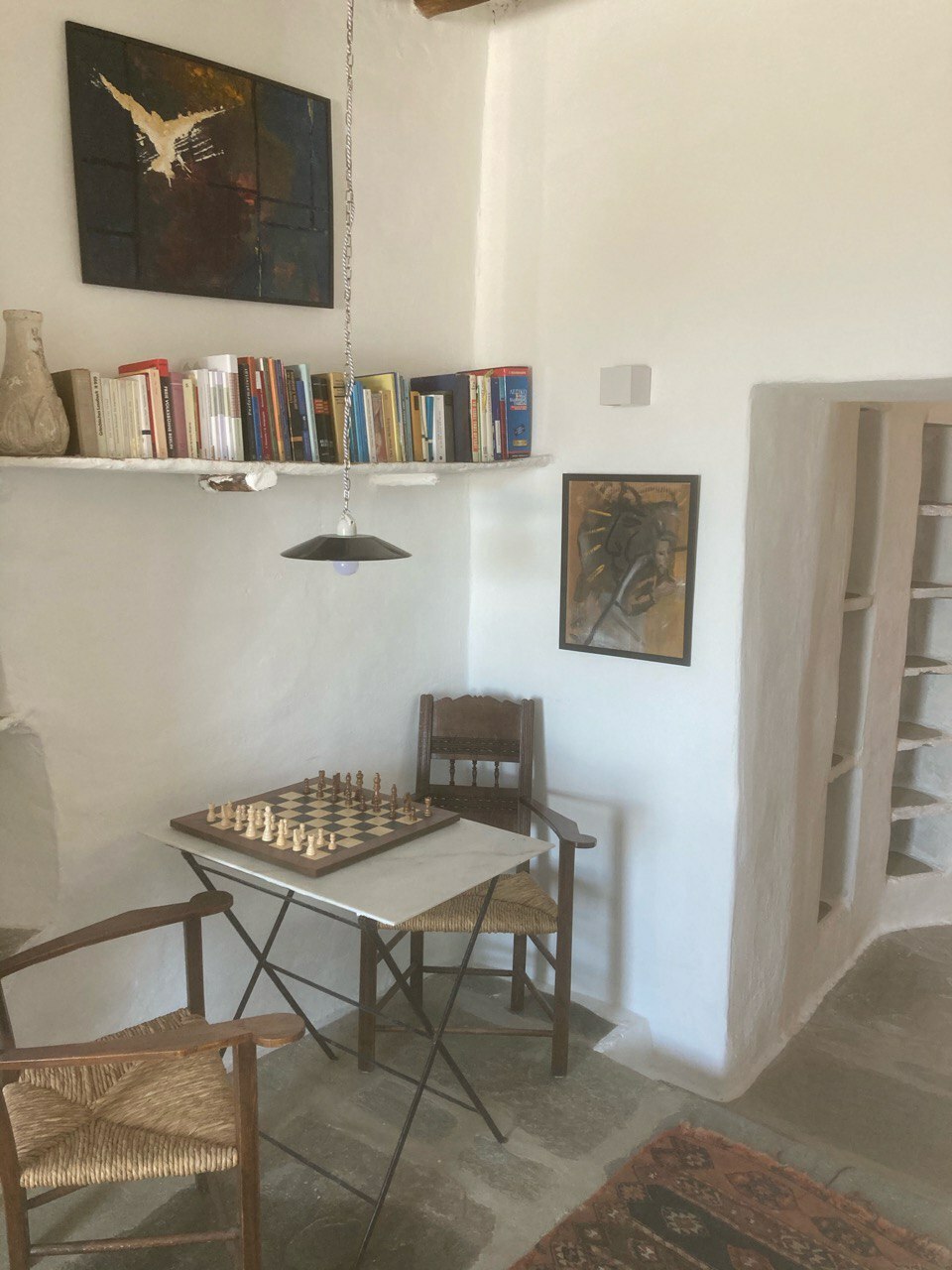
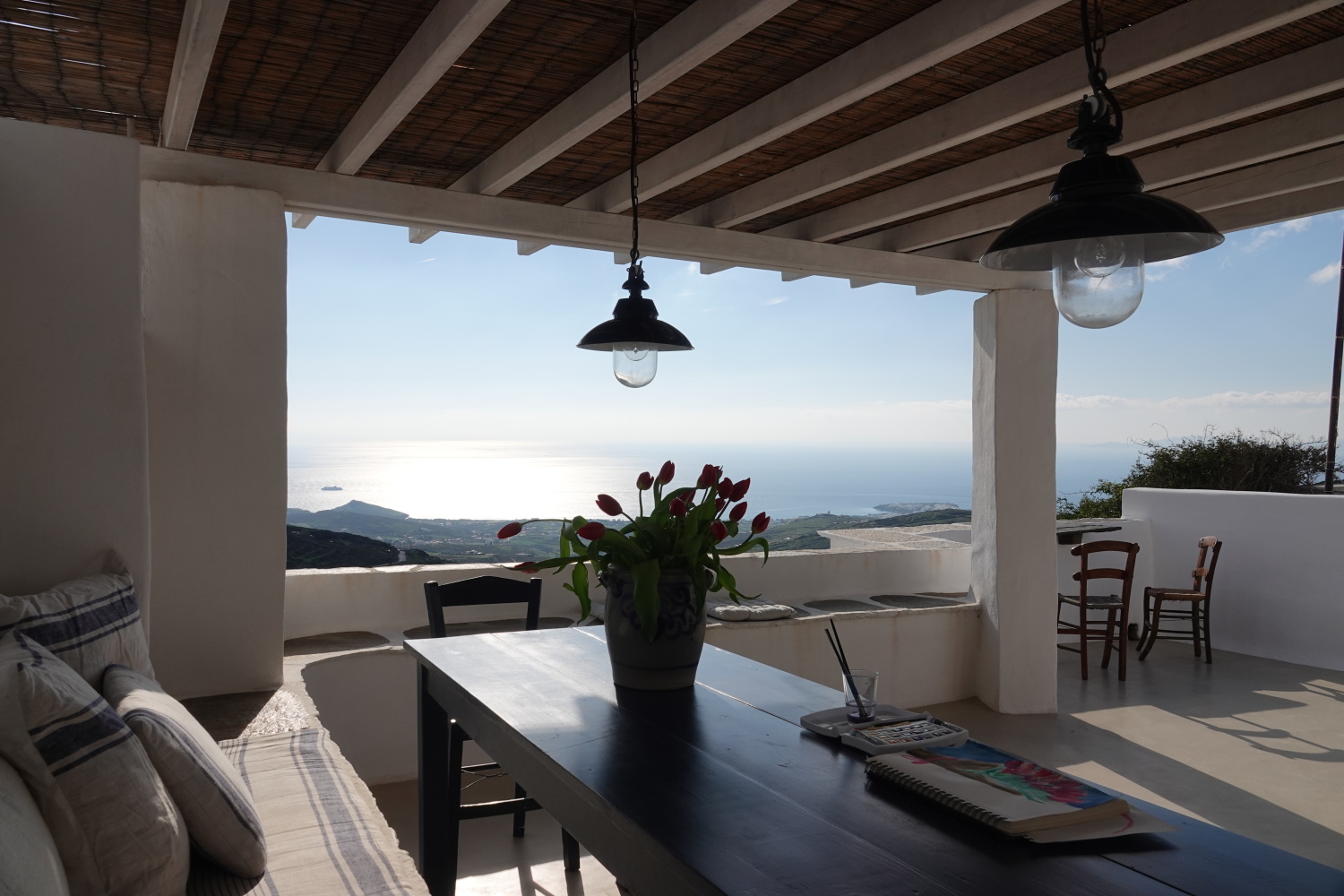
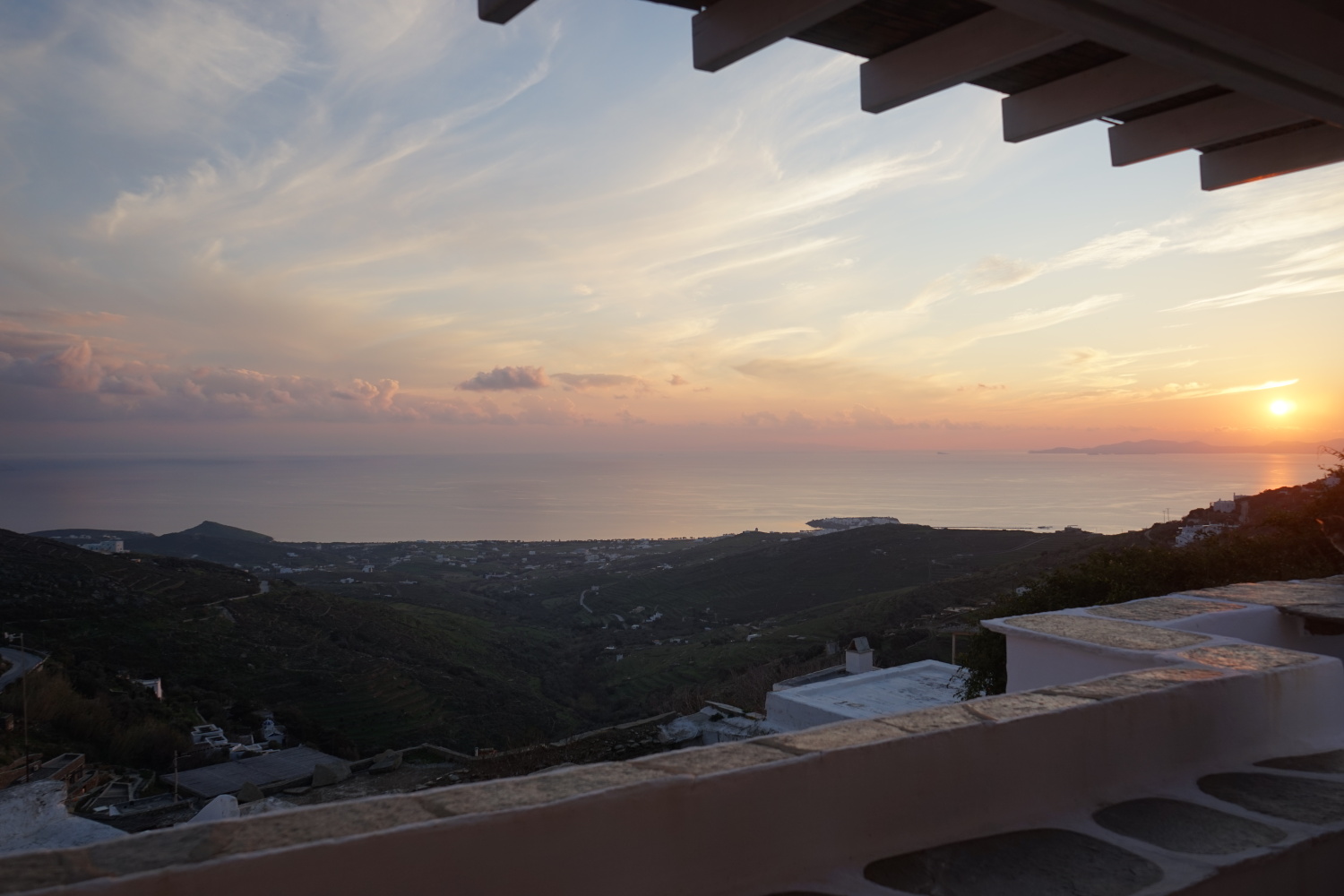
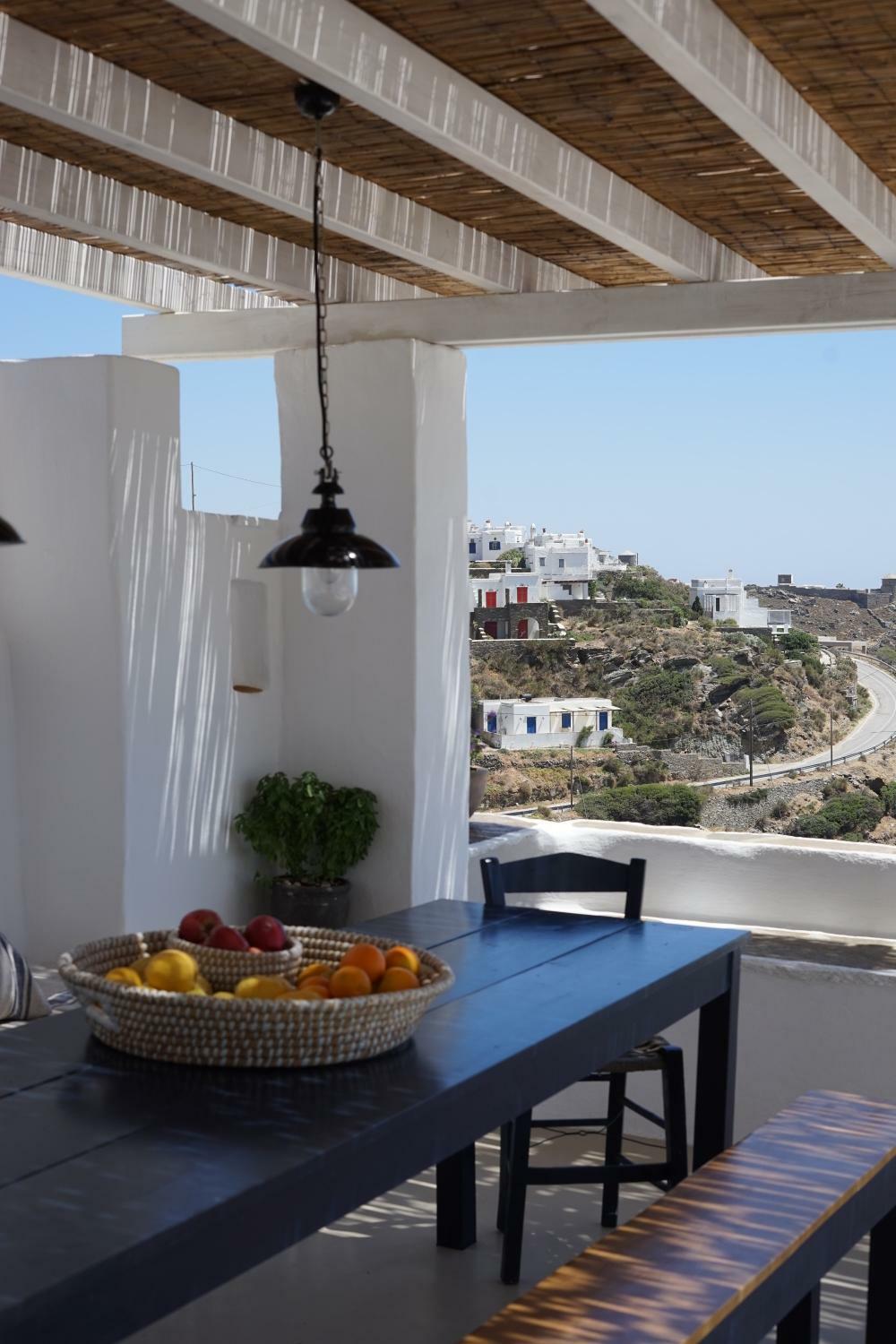
The traditional stone house offers panoramic views over the sea, the countryside and the surrounding islands. There are three tables on the two spacious terraces, so that couples, friends or families travelling together can both retreat and share space. On two sun loungers and many other relaxing possibilities on which you can play Tavli, read and sunbathe. Best of course with a cocktail and fresh ice cubes. Kitchen and living The kitchen is fully equipped to a high standard for cooks and gourmets. For example, with a barista espresso coffee machine, a large side by side fridge, a Kitchen Aid and many more. Just oregano and salt? A spice rack with spices from all over the world allows real cooking, in front of the window there is a small herb garden. In the centre of the kitchen is a cooking island with a gas stove for joint cooking evenings. Two dinning areas are available, the long table on the terrace has a sunset view. You could also end the day comfortably between the piano and fireplace, at the inside dining table for up to 8 people. Since this house, like most village houses, is built on the rock and made of natural stone with solid walls, it remains pleasantly cool even when the outside temperatures are high. In addition, ceiling fans contribute a fresh breeze. There is also a water filter system for drinking water installed, which saves carrying water bottles and plastic waste.
Culture
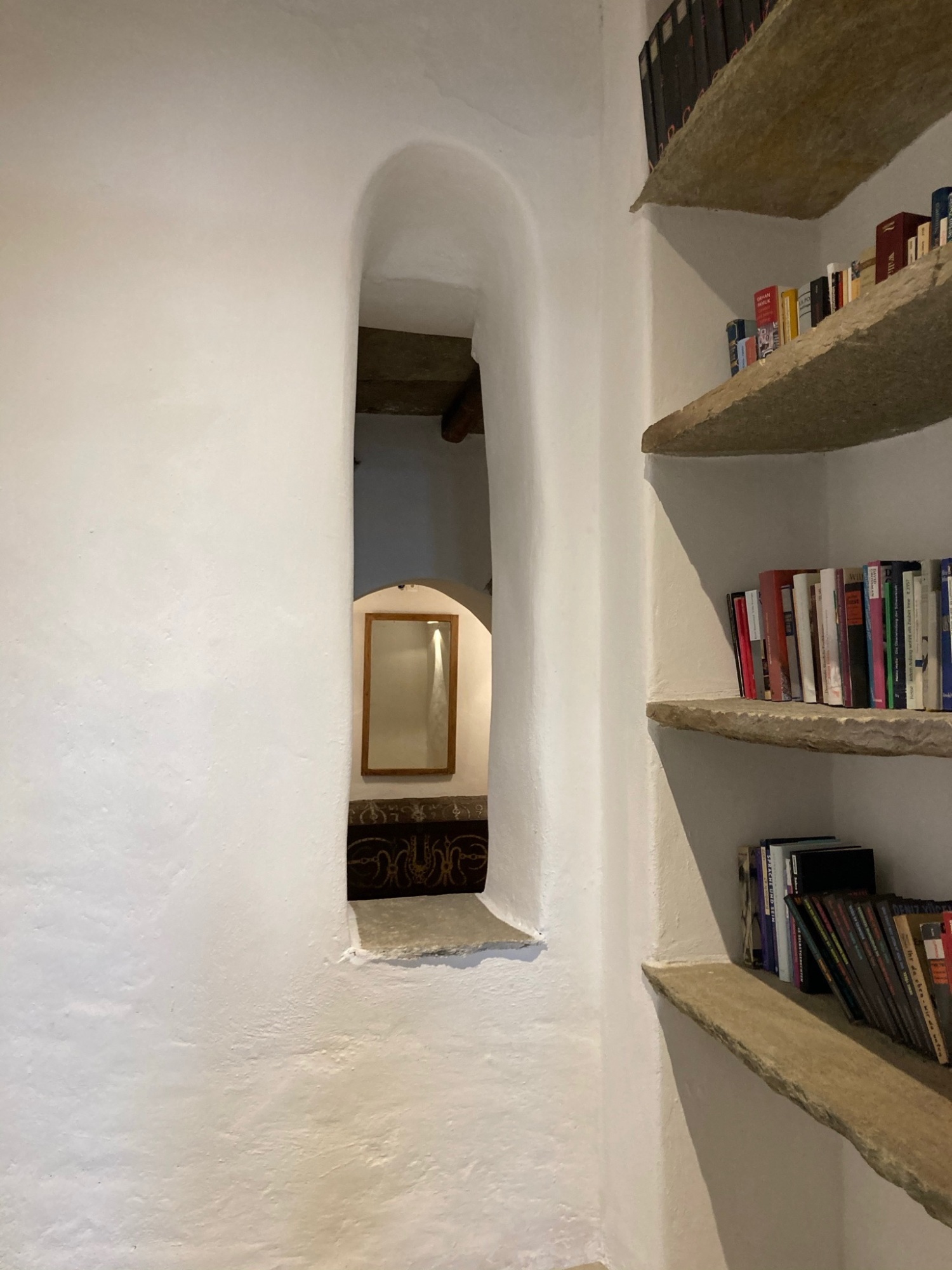
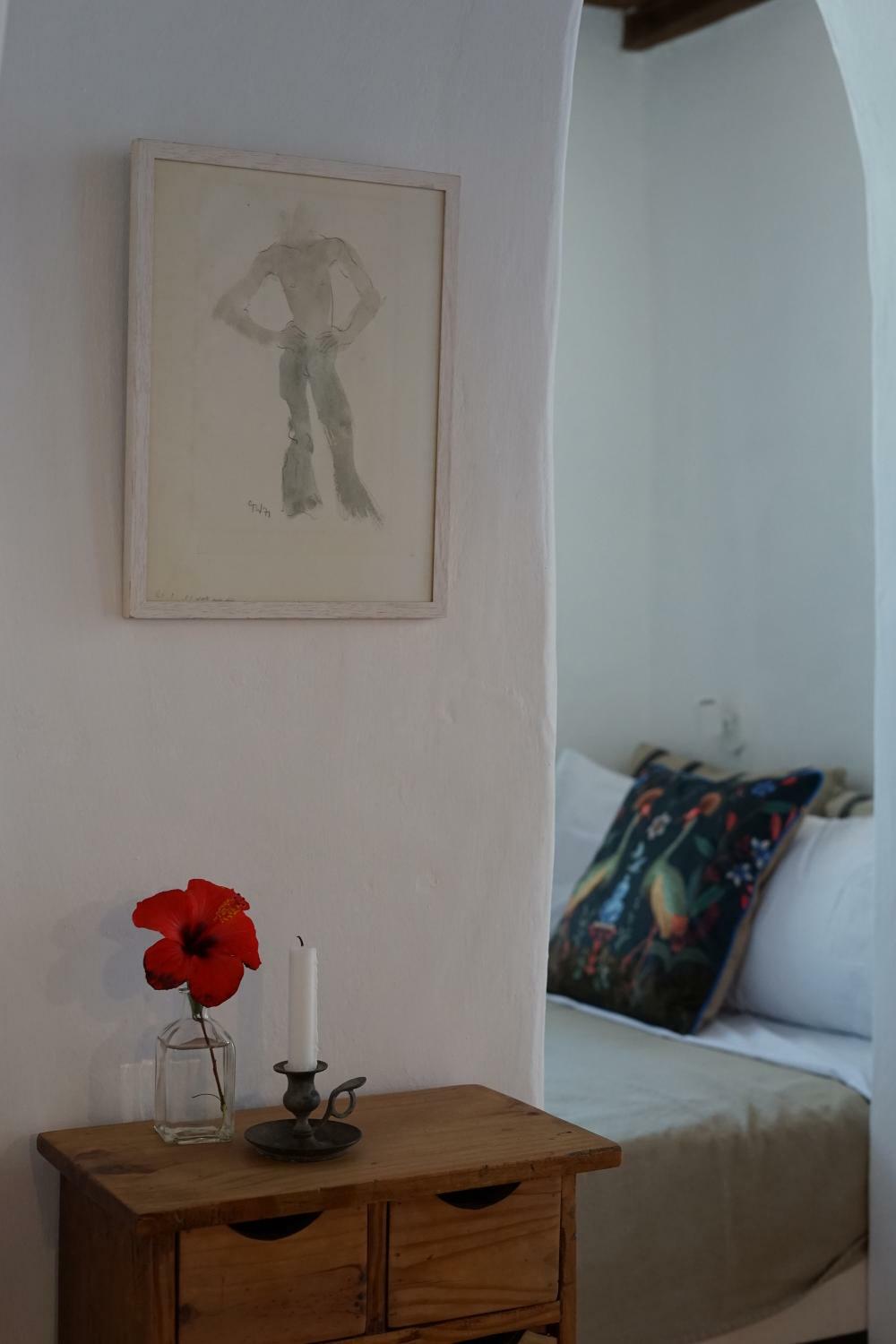
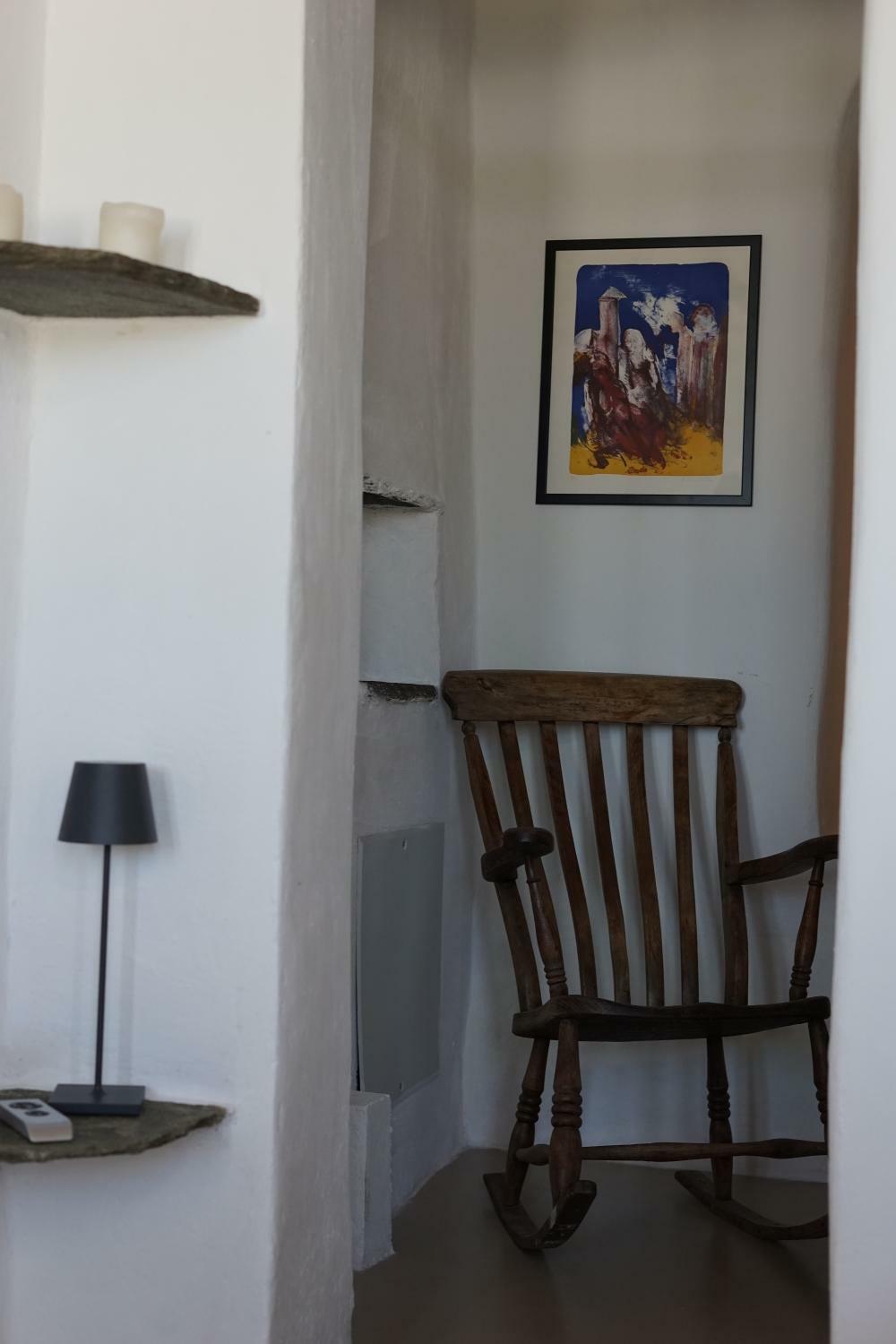
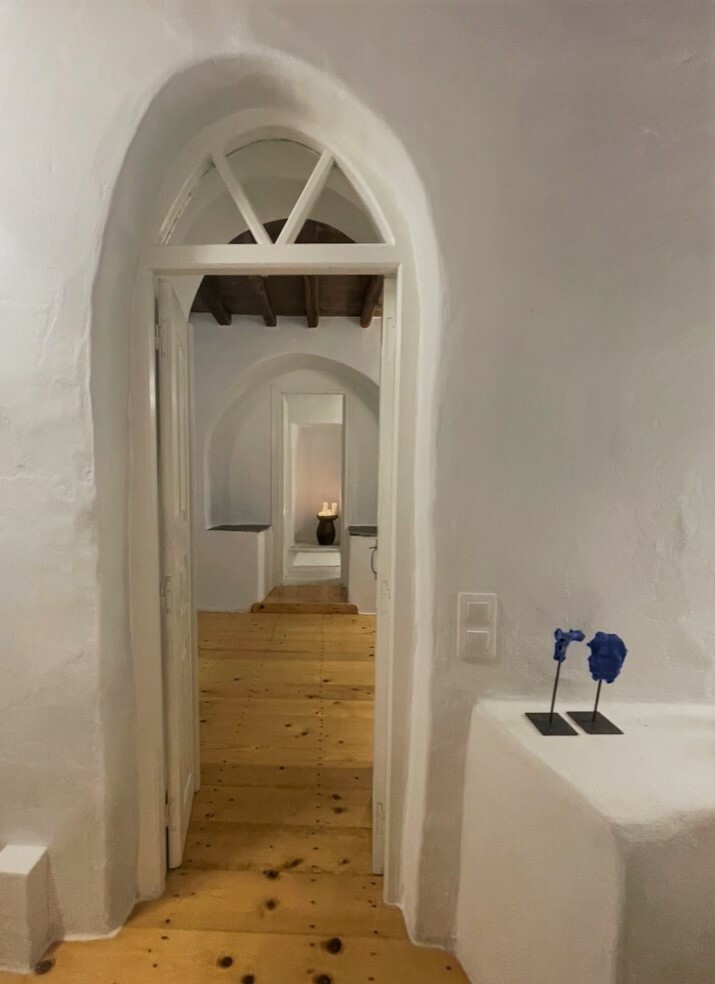
The Artist House is not only a residential building but also a gallery, with changing exhibitions by well-known artists and newcomers. This year, works by graduates of the Düsseldorf Art Academy will be exhibited, together with a small catalogue. A piano, a library as well as the studio offers spaces for your own projects and ideas. On request, we can provide an easel and painting materials. For artists, authors and digital nomads there is a studio with sea view and fast internet in all areas of the house.
Bedrooms and Bathrooms
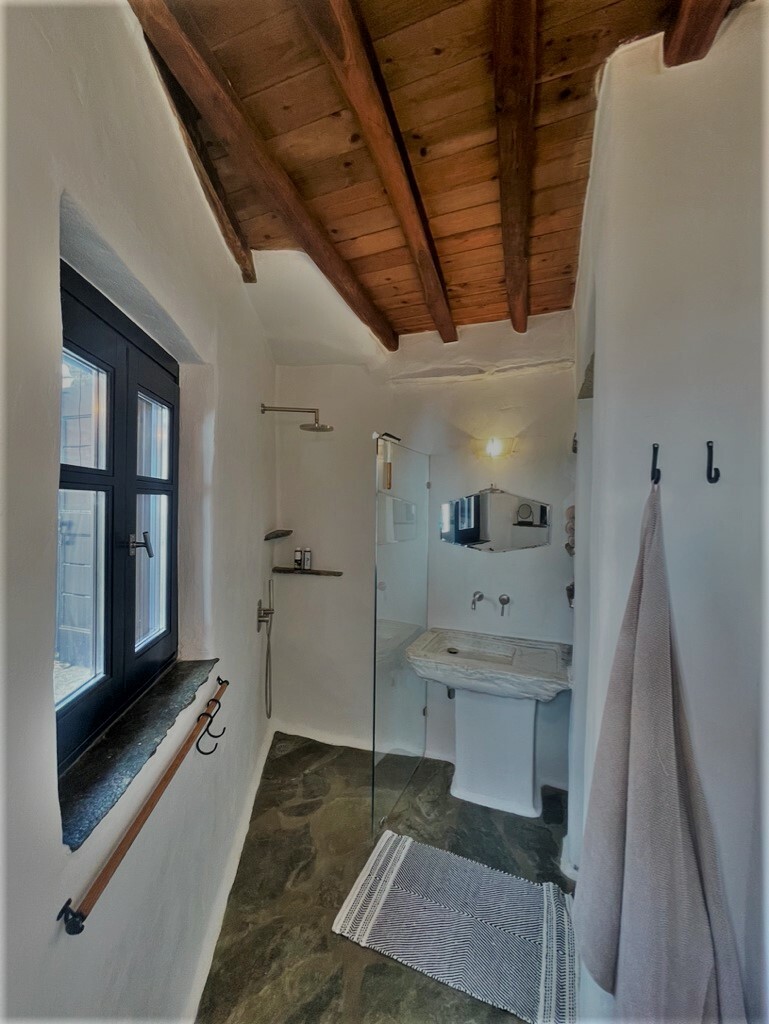
The house has two bedrooms and a traditional sleeping alcove. The largest bedroom on the ground floor overlooks the sea. A large walk-in closet, a small library and the studio are attached to it. In the studio, an extra bed for children is optional. The second bedroom on the ground floor has a wardrobe and a stone table. The traditional sleeping alcove is on the upper floor, connected to the dining room. Here you can withdraw, read or have a siesta. The sleeping alcove can be used as a sofa or as a bed. Both bathrooms are equipped with large rain showers, antique marble sinks and toilets. A washing machine, ironing board, drying rack and hairdryer are available. Access for guests: Free parking is available at the village and the surrounding areas. The Cycladic village houses are traditionally connected by stairs and small alleys. Please take note that you will have to overcome some stairs to get to the house.
Address: Triantaros 100, 84200 Tinos, , Greece
Size: 256.0 m², 8 Rooms, 4 Bedrooms, 3 Bathrooms
Beds: 1 Double bed, 1 Child bed, 3 Queen size beds
Prices: 400 EUR - 643 EUR / Night
Triantaros village, Tinos: “Overlooking the Aegean deep blue…”
Until the ’60s, Triantaros was one of the villages of Tinos with over 300 residents. There are indications that the village existed since the medieval period (about 1000 AD). The unique view of Tinos to the surrounding islands, and respect for the traditional architectural features are the two main characteristics of the village. Starting from Triantaros, two streams flow into Gyrla and Agia Paraskevi, creating green valleys. In the wider region the windmills and watermills were gradually abandoned or converted into homes. Vrisi (upper village) and Xynari (lower village) are the two traditional wells in Triantaros while the springs under the poplar trees are a point of reference among locals. In the square of Xynari, a well-preserved part of the old traditional olive press attracts the attention. The Hero’s monument, the work of John Philipotis, a great sculptor, is also worthseeing. The parish church of Triantaros, the Church of Apostles, built in 1861, is one of the greatest on the island and boasts for its marble and carved interior decoration. The church of Gria Panagia (the name indicates the familiarity of the people with the divine element, since “gria” they called their mother), had two temples: one for the orthodox and one for the Catholics who attended services under the same roof. The form of an animal-like rock, the”Vayo”, as it was known, was a place that children used to avoid since it had been connected with scary tales and legends. The last Sunday before Easter, the children of Triantaros rivaled those of Dyo Horia over who will succeed to conquer and subdue the magical rock. Access Located 7 km away from Tinos (Chora). Follow the old road network (starting from Zannaki Alavanou Av.) and at the first junction turn right toward Triantaros.